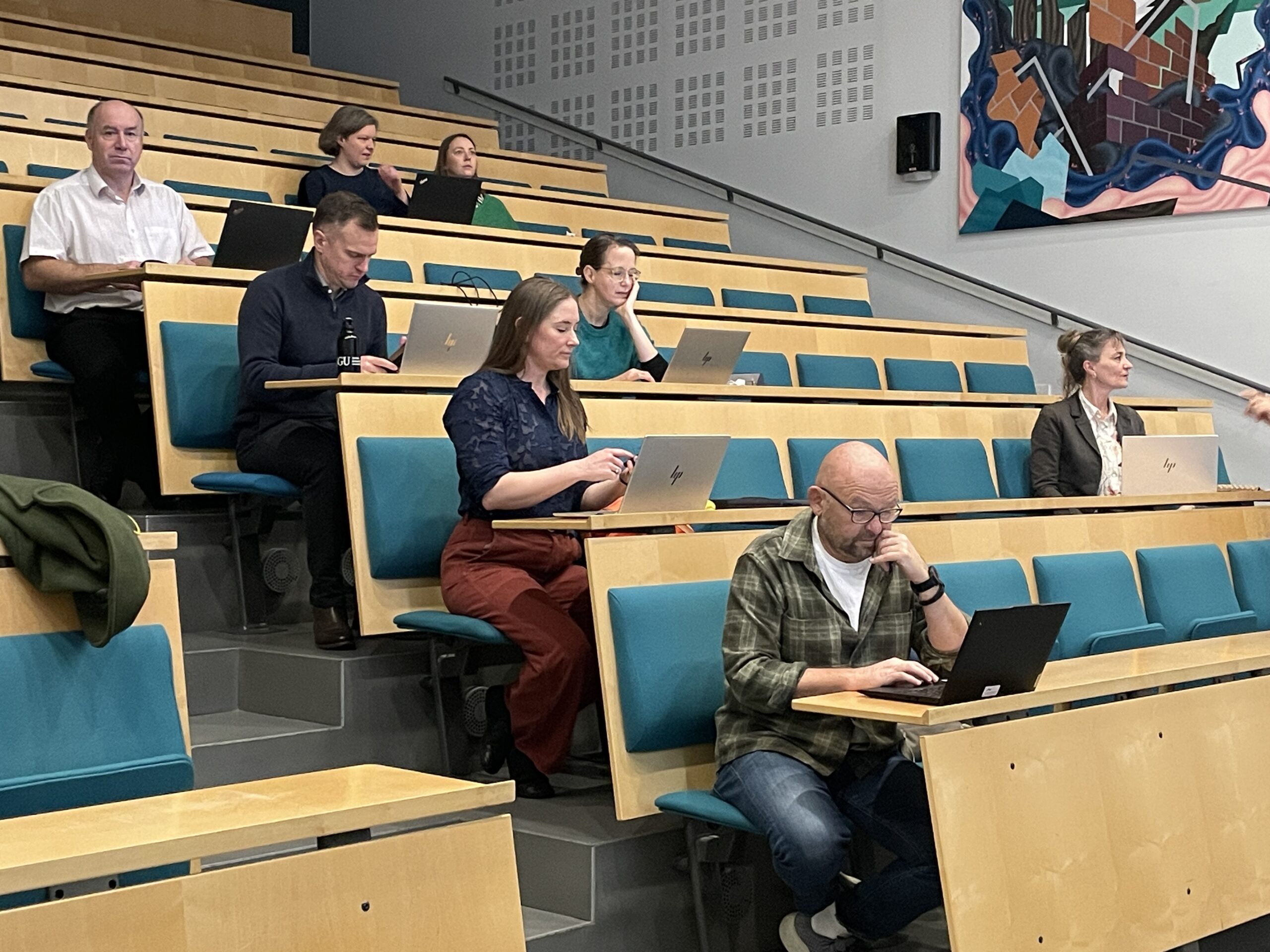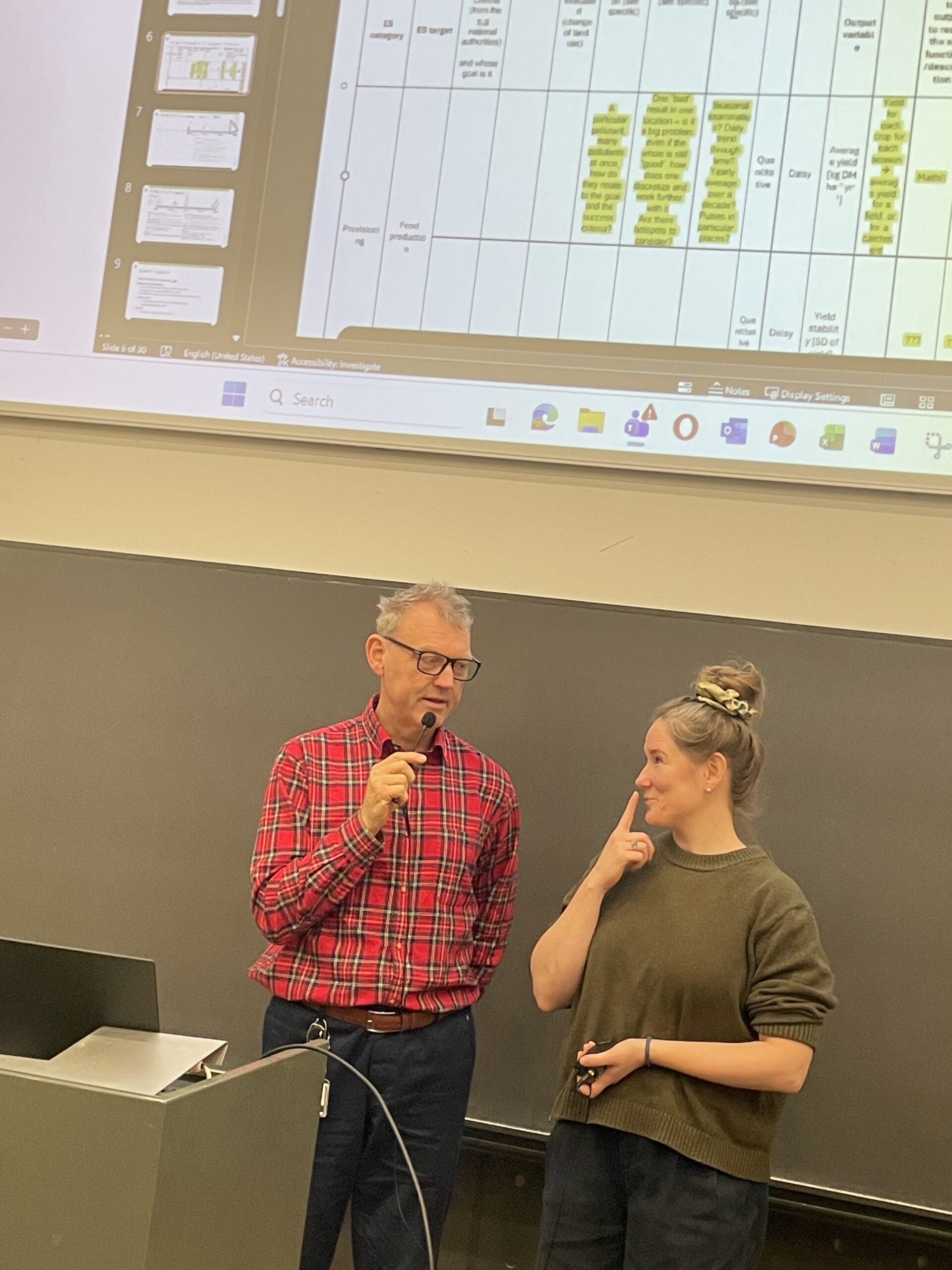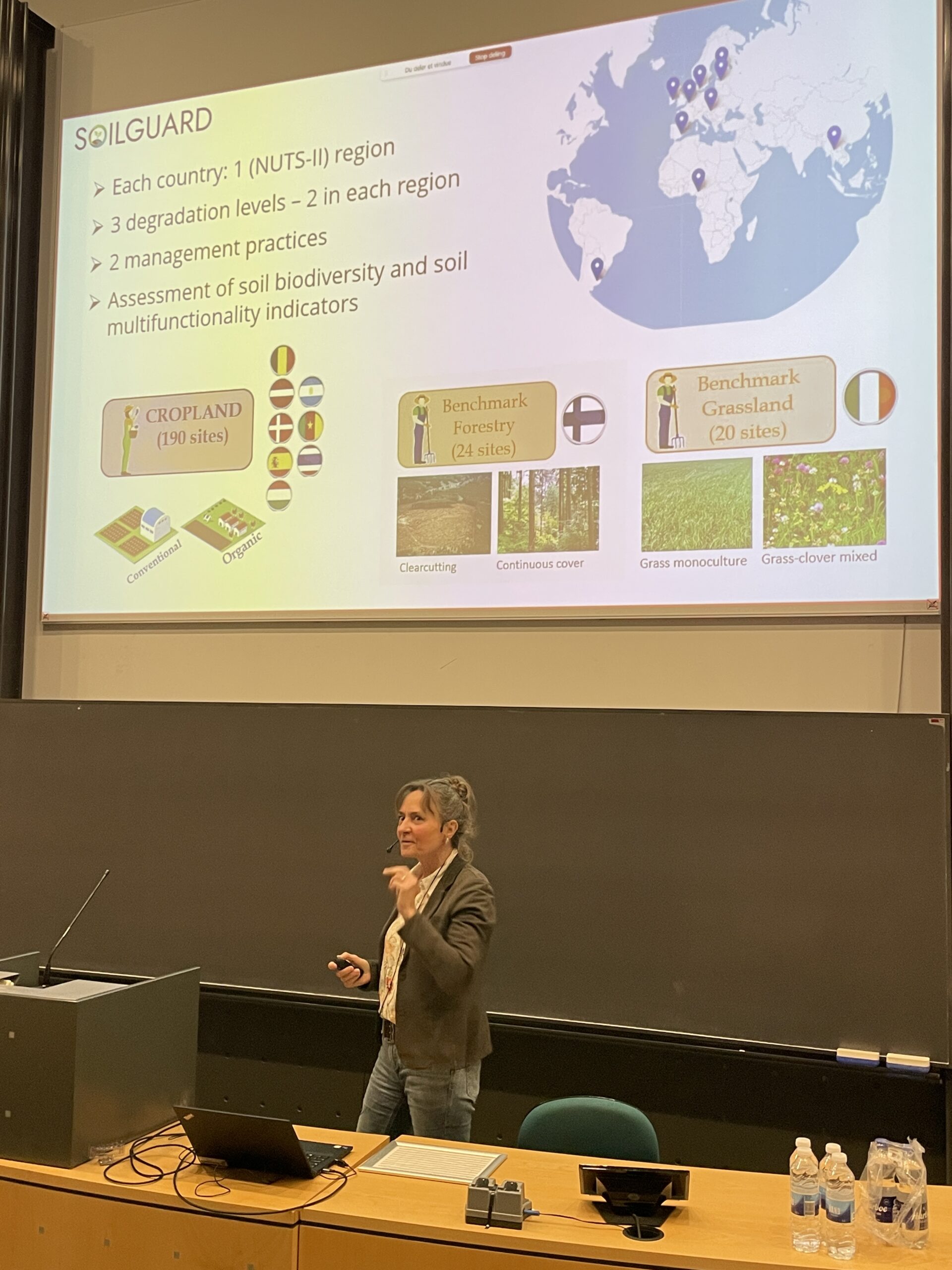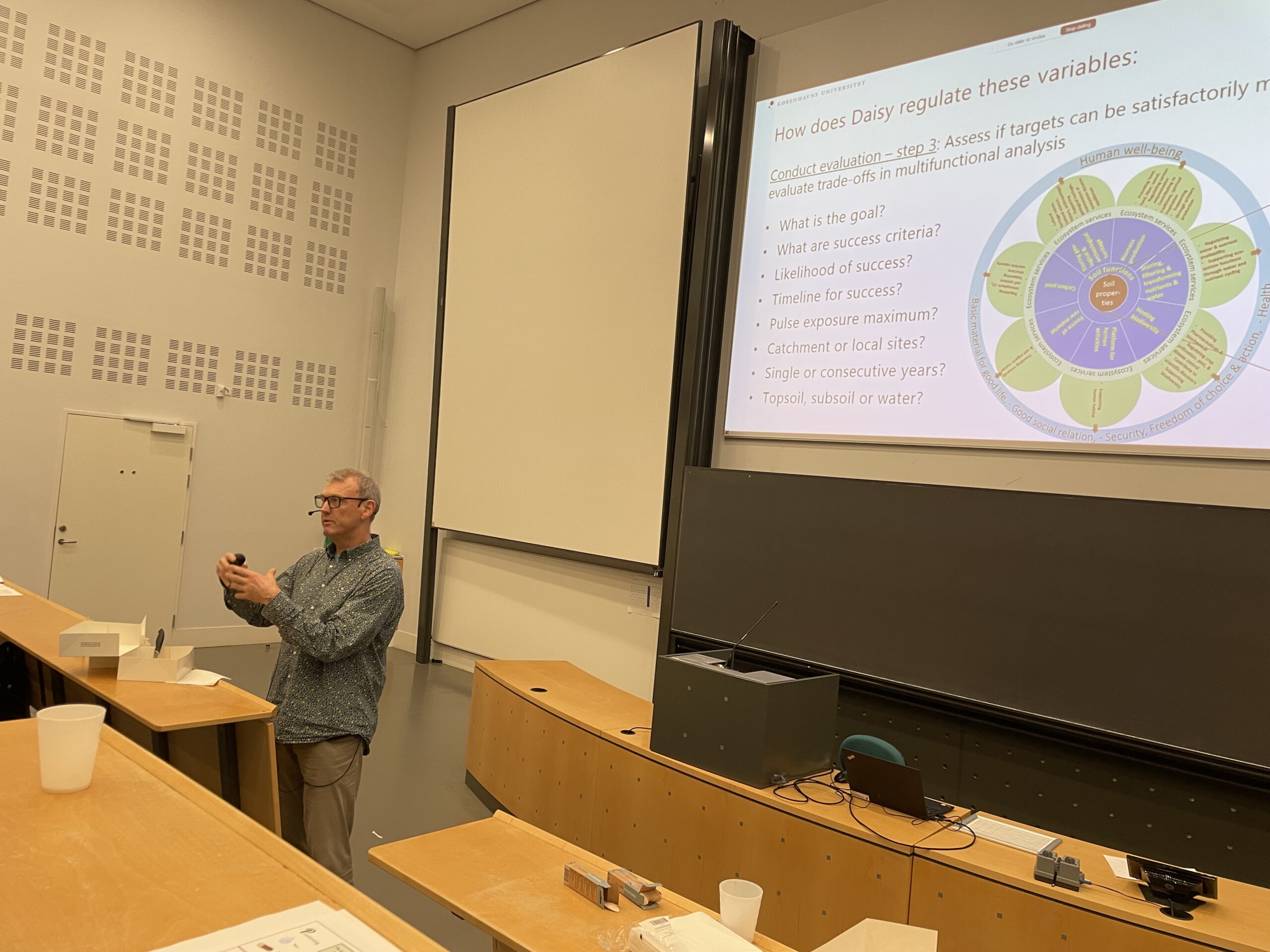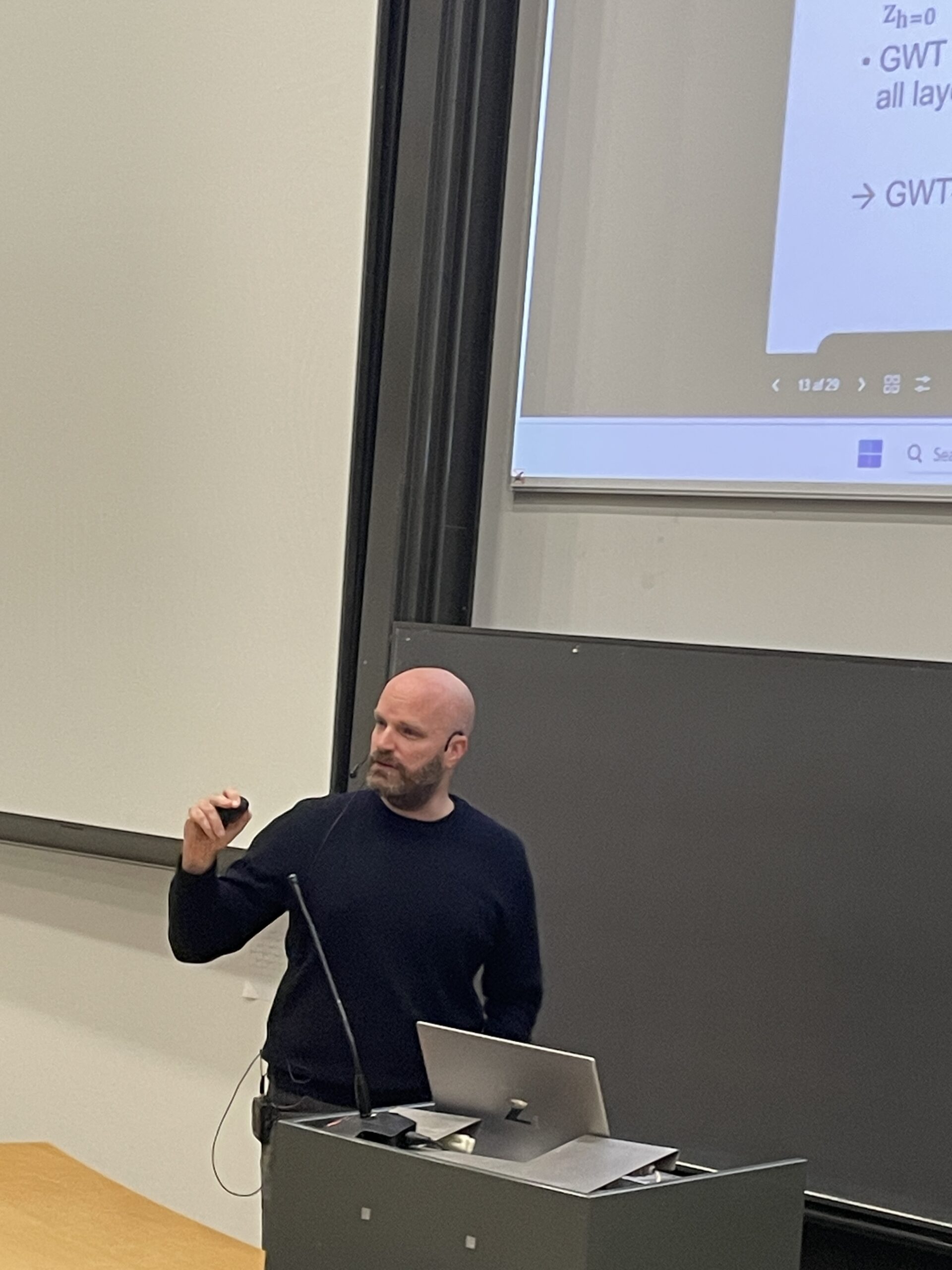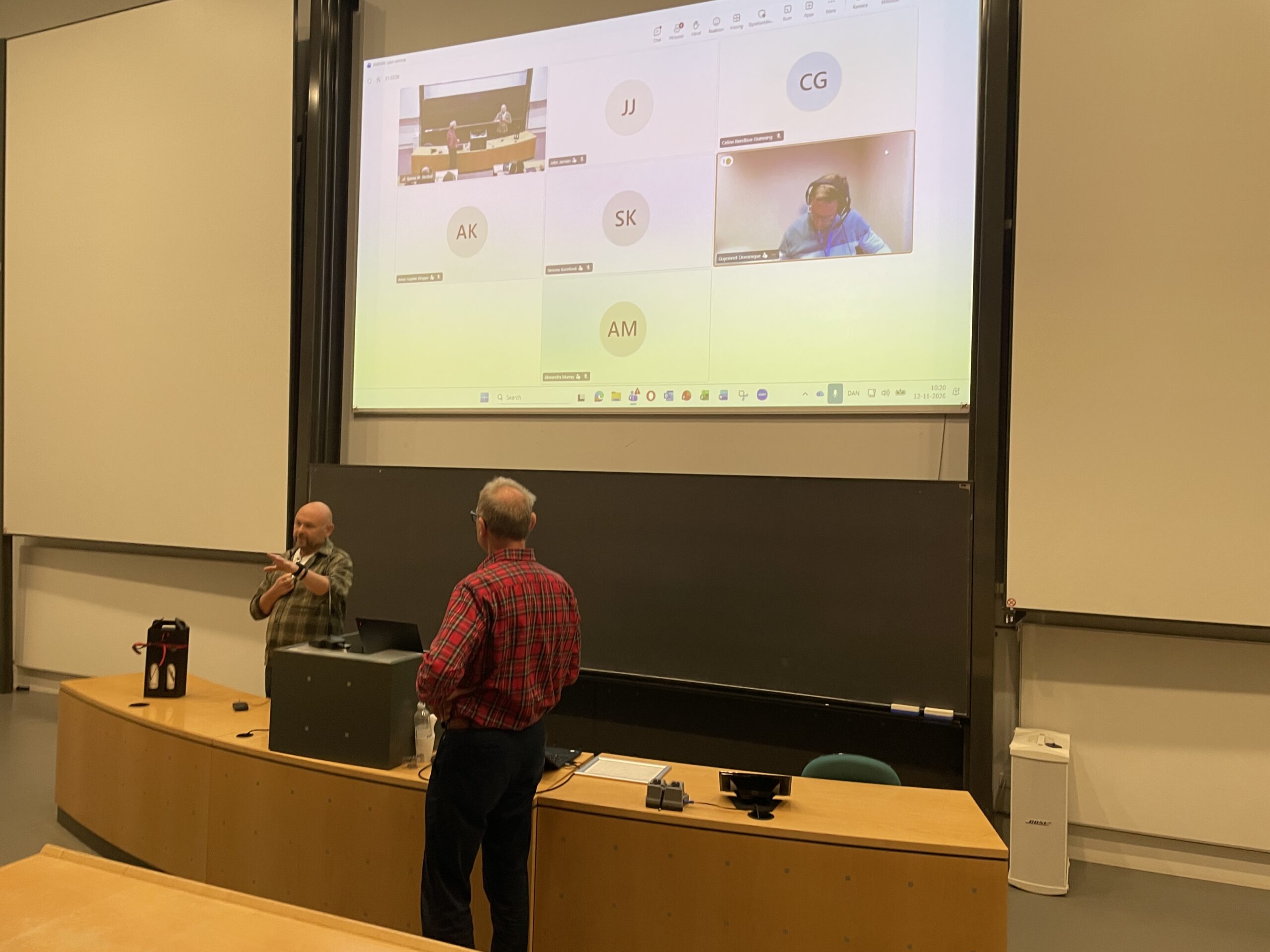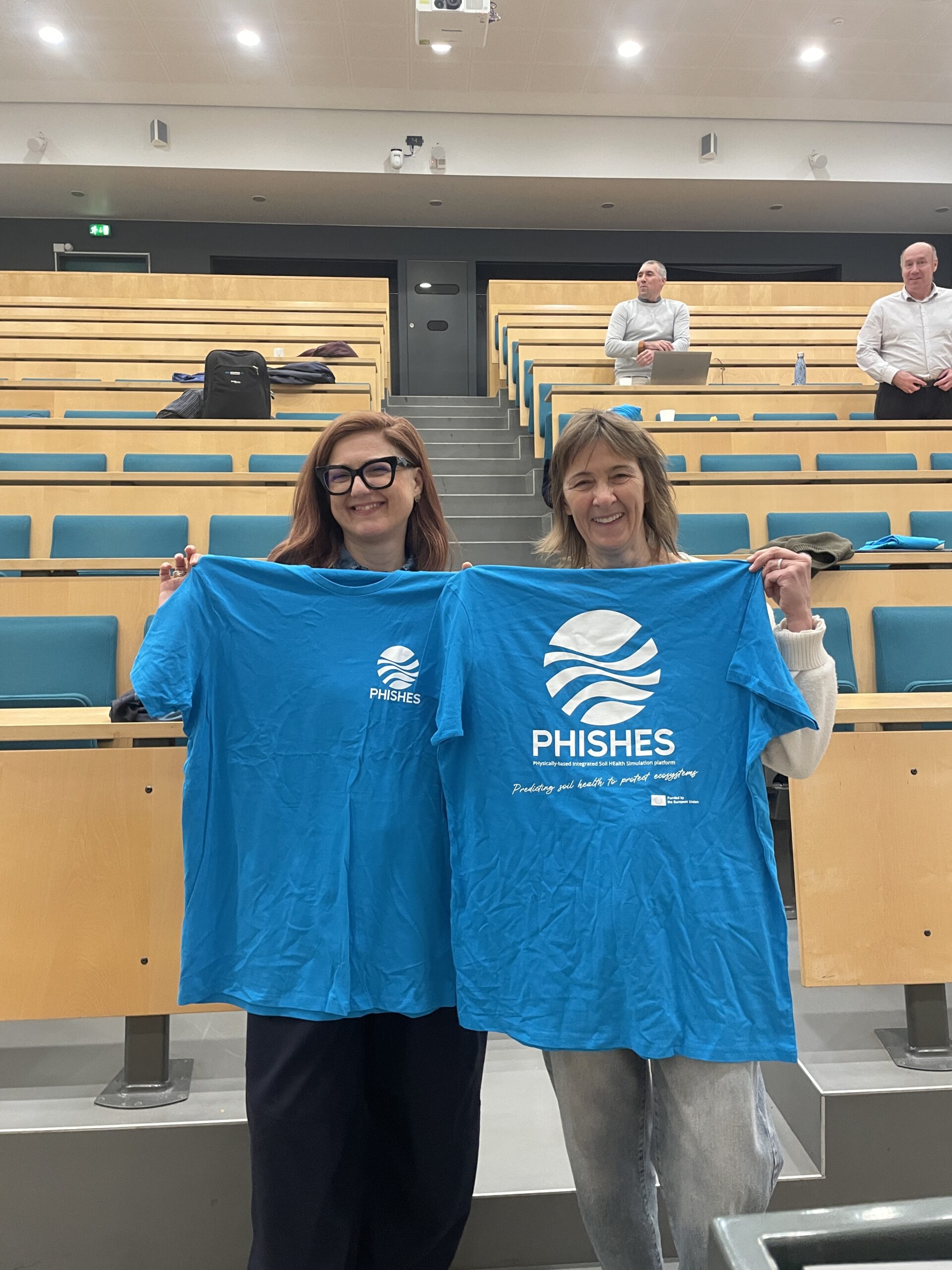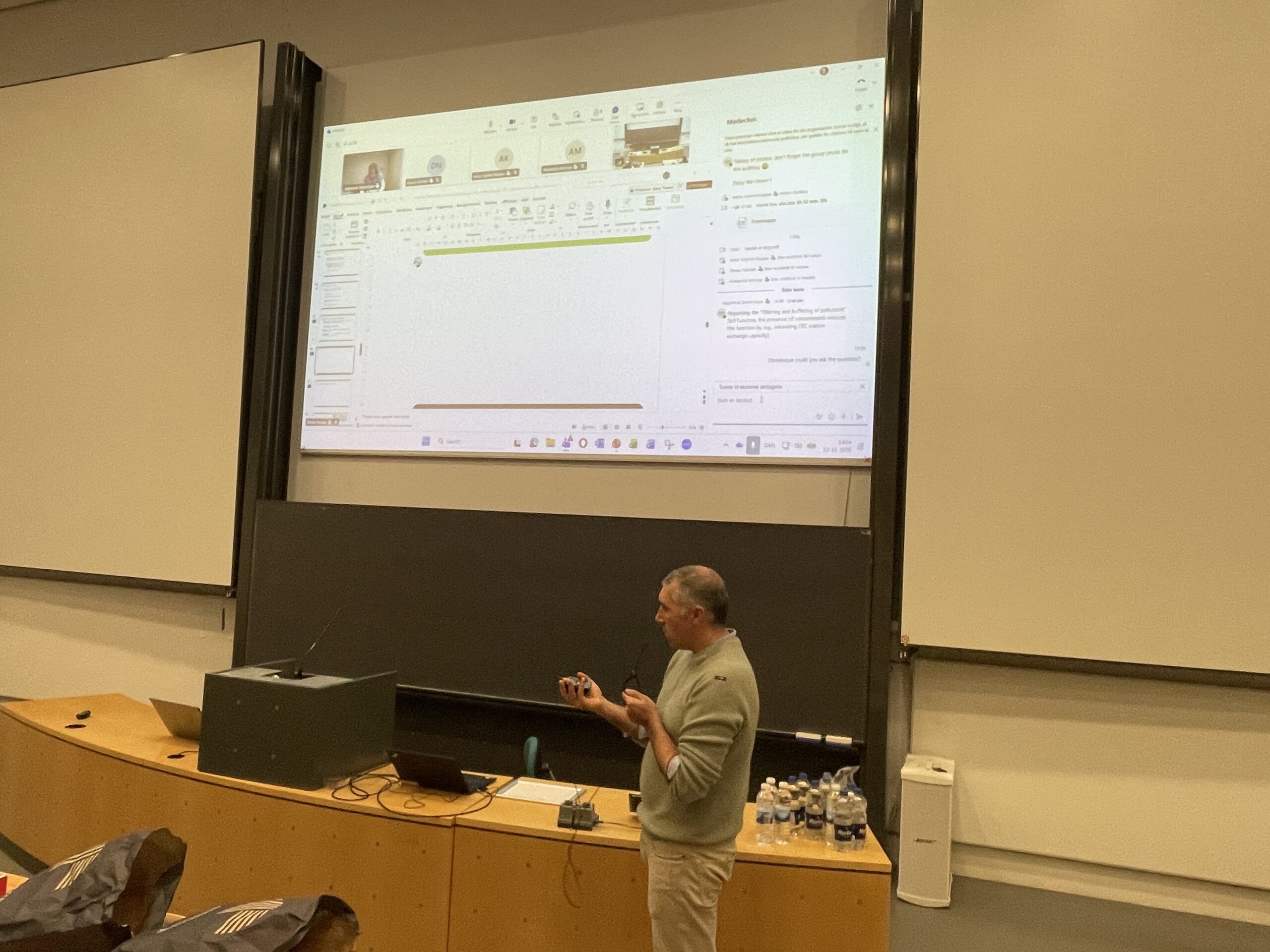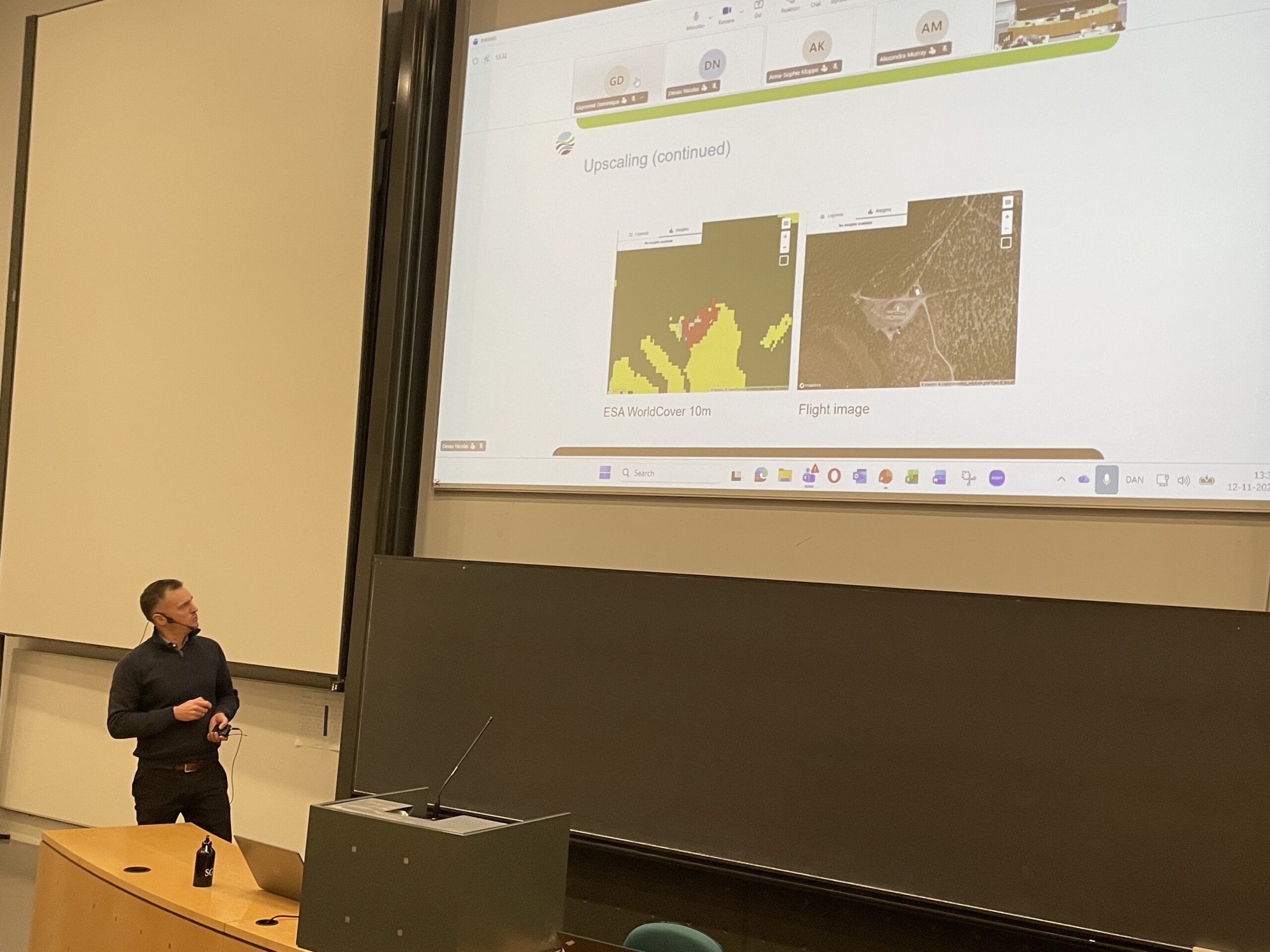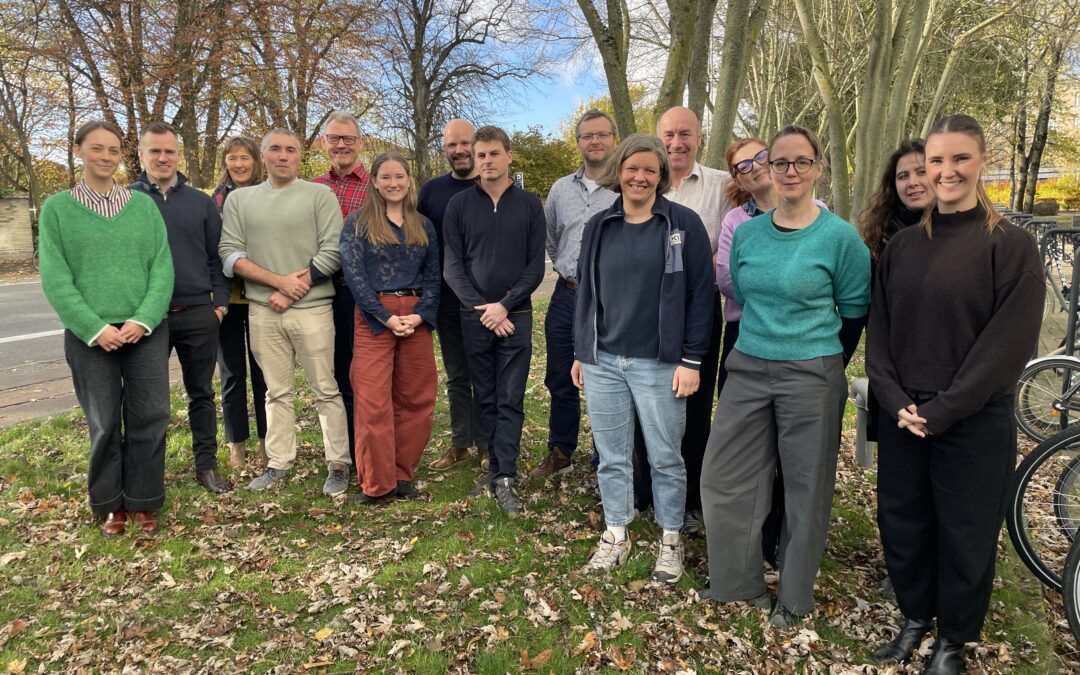
The PHISHES consortium and invited guests gathered at the University of Copenhagen (UCPH) for three intensive days of joint work (11–13 November 2026). The workshop focused on a central challenge for the project: bridging the missing link between data on soil health and concrete actions to safeguard soils.
Discussions centred on how to interpret model results that can inform soil management and policy, and on the road map for the upcoming second half of the project.
The first day focused on soil functions and ecosystem services. Partners explored how soil processes simulated with the coupled Daisy – MIKE SHE model train can be linked to the services soils provide, and discussed in working groups a framework for evaluating model output variables against soil health descriptors. This is the step that makes simulated results readable for soil managers and decision-makers.
Day two opened with an open seminar where invited speakers brought outside perspectives: Samuel Kolade (Ben-Gurion University) on PFAS transport under varying water content and infiltration; John Jensen (Aarhus University) on environmental threshold values under the EU Soil Monitoring Law; Annette Vibeke Vestergaard (Danish Technological Institute) on multifunctional assessment of organic and conventional farming; and Hubert de Jonge (Aarhus University) on the new EU project PSOILICY, which links soil science and policy.
In the afternoon, the consortium turned to PFAS and heavy metal modelling. The focus was on how pollutant accumulation and transport simulated with the HP – MODFLOW model trains can be evaluated against the sustainable target values (STVs) and operational trigger values (OTVs) of the Soil Monitoring Law.
The final day addressed the core question of the workshop: how to translate model results into action values and Key Performance Indicators. A session on toxicokinetic-toxicodynamic (TKTD) models showed how modelled concentrations can be linked to ecotoxic effects on soil and freshwater organisms. The consortium then outlined next steps for KPI development and a plan for peer-reviewed publications.
Partners left with defined processing steps, coupling tasks and timelines for each institution. PHISHES leaves Copenhagen with a shared plan for turning model results into KPIs and publications, and with clear momentum towards the milestones of 2027.
Thanks to the University of Copenhagen for hosting, and to the invited speakers for their contributions.